Archives for category: Weirdness

Caps are relevant.

Low-end:

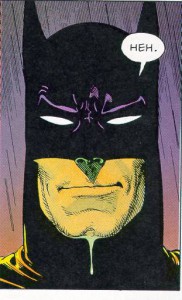
  • heh: “I approve. This is sort of funny.”
  • hi: NaL (Not A Laugh).
  • hee: You’re trying to show that you’re gleeful. You’re trying, and that’s appreciated.
  • ha: Ok, we’re both interesting enough to sustain a conversation interspersed with dry humor.
  • :)  works, but could also be a stop-gap “I am not sure what to say” or “I hope you realize this is not really funny for me, but I can still pretend like it is.”
  • :) :) :) (or an unspecified number of smilies) You made me feel really happy.
  • :-D is a little warmer. No, Skype-users, regardless of what you say, this still means a grin, and not a laugh.

Medium-end: (Huh? That does not even make sense!)

  • hihi: Almost NaL. Requires context to be interpreted thus. Possible to misunderstand as you saying hello too effusively. Don’t use, please.
  • heehee: Perfectly valid, somewhat-naughty giggle. Bonus if you’re smoking hot and/or cute.
  • eh heh heh: On the creepy side. but if we’ve been naked together or if there is a possibility of us getting naked together, this would count as foreplay. Also, if this is a legitimate League of Extraordinary Gentlemen reference, I love you already.
  • har har: Sarcastic. Also says you grew up in the eighties, just like me. But it’s been 22 years already.
  • snicker: You’re making fun of me. For real, right? This is most disconcerting.
  • ho ho ho: So’s your momma.
  • :))  Convincingly funny.
  • :-D :-D :-D :-D or :D :D :D :D  You’re showing borderline reactions. I don’t know if you find this really funny or sort of funny.

High-end:

  • haha: Definitely ironic. Too calculated to sound like you find this humorous.
  • HAHA: “Funny, but I do not have time for this.”
  • hahahahaha: “Funny. Will probably react with a witticism/link/youtube video of my own within the next few minutes.”
  • HAHAHAHAHAA: “Ok, I would find this extremely funny if I was not busy and would probably respond with a witticism/link/youtube video of my own, but I am a little pressed for time and this is the most I can respond with. Also note the typo at the end, which shows you how busy I am.”
  • ahahahah/AHAHAHAH: Same as above, but post-modern.
  • Hah hah hah: Totally creepy. In my mind, this is a transcription of heavy-breathing-over-phone.
  • muhuhaha/muhahaha: We just shared an evil scientist/dead baby/ joke. We’re cool.
  • bwahaha: Slightly more sophisticated version of the above, and I will assume you’ve read Giffen/DeMatteis/Maguire’s run on JLA.
  • mwahaha: Fuck you and your portmanteau words. Who do you think you are, Lewis Carroll?
  • muahaha: This makes me feel like you’re kissing and laughing at the same time. Please stop.
  • lol/LOL: Oh ok, you’re lazy. If I like you, I will just mentally replace this with “hahahaha”. If I don’t, I will totally judge you.
  • ROFL: I know you’re not really R-ing on the F, but it’s nice mental imagery if you’re smoking hot/cute, in which case I would probably be thinking of R-ing on the F with you too. If you’re not, whatever.
  • :))))))))): You’re trying too hard to show that you are amused. That is not a good sign.

Someone approves.

The vacuum cleaner at home went kaput around Christmas. For an interminable amount of time, the room-mate and I dilly-dallied about fixing it – do we spend 200-odd dollars fixing a five-year old appliance or buy a new one? And simply buying a new one wouldn’t do, it had to be a good one. Something that made us want to clean up. Well, it didn’t have to, but we talked about it all the same.

On Tuesday, ‘Drea the Awesome informed me that fixing the old one was out of the question. It was too old, the repairman said, and it couldn’t suck any harder. I know that last line sounded ridiculous, deal with it. I agreed that I should be the one to buy the vacuum cleaner, it was only fair because 80% of the items in the house belonged to her anyway. On Wednesday, ‘Drea pinged me again. “I have the perfect model”, she said. All the reviews on Amazon seemed to agree with her choice, but $500 for a vacuum cleaner? If it were possible to slowly back out towards the exit when you are in a GTalk conversation, I would have done that.  My Indian self decided to opt for Civil Disobedience instead – let’s just not bring up the topic again, I thought, until the house got really really dirty, and then maybe we would buy a cheap-ass vacuum cleaner and be done with it.

But I read some more of the reviews. And the world re-aligned itself in my head, slowly.

It helped that on Thursday, ‘Drea pinged again. “20% discount coupon at Best Buy”, she said. Say the word ‘discount’ to an Indian guy, and things become much, much clearer. “Fine”, I said. “Let’s do it.” On Friday, we realized that there was an even better deal to be had at Costco. All self-doubt vanished. I actually began to look forward to Saturday, just so that we could buy the damn thing. And we did. And came back home and finally took down the Christmas tree, and unleashed the new Dyson DC25 in my room. My heart sang along with the vroom of the motor, and I moonwalked as dust rattled into the canister, swooshing in from awkward recesses and stubborn little corners. And it even worked on wooden floors! ‘Drea and I took turns cleaning the living room, where pine needles and cat fur jostled against each other, and where, under normal circumstances, one would need herculean levels of self-control to not fling the previous vacuum cleaner against the wall. It felt…empowering. Suckadelic.

Or maybe it’s just my brain trying to calm myself down after this act of financial cold-bloodedness.

By next Wednesday, 50% of the items in the house will belong to me. That’s because 134 cubic feet of books and comics (weight: 1100 kgs) land at my doorstep. And with that, my books officially have had more adventures than me. Most of them were bought in the US, and have traveled from here to India, and now they’re back in the USA again. I occasionally freak out at the thought, because 134 cubic feet feels like a lot of space in a two-bedroom apartment, but deep, calming breaths are being taken. I will be fine. Everything will be fine. Right?

Today morning, I was on the bus playing one of my Spotify playlists, and suddenly I had this urge to listen to ‘Masakali’. One of the cool things about Spotify is its extensive library, and sure enough, ‘Masakali’ came up in the search. But not the original version, this was from Mohit Chauhan’s unplugged sessions, and a brilliant live rendition it was. I began playing the complete Unplugged – Mohit Chauhan album, and by the time the acoustic version of ‘Dooba Dooba’ was underway, I thought I should tell people about it. Spotify, like any self-respecting application nowadays, allows you to tweet about what you’re listening to and I did, accompanying it with a handy link. Of course, none of the people in India could access it. And then I had to google for “mohit chauhan unplugged 320″ which brought me to a handy download link that I could share. (That’s a hint for you, in case you want to listen to something and torrents are not handy at the moment)

And they wonder why people pirate. Seriously, what does a guy have to do in order to share music? Send Youtube links, sure. And if I can do that, why not anything else? What, in this day and age, explains the stupidity of disallowing applications from working in certain countries? Fuck you, music companies, I am not asking for free music. All I need is a way to painlessly recommend music and listen to music others are recommending without having to jump through hoops. You are not “restricting” anything, you are just adding an extra step to whatever it is I have to do. The logic and economics of this escapes me.

Paying for Spotify has removed the need to (illegally) download – and manage – a huge library of music. I do not need to carry my external HD around. The app really has everything, or close to it. Sure, not all of Rahman, but I am discovering a shitload of new music every day and I don’t need to worry about storage. Or even being on a network all the time, because the handy “offline” feature just downloads the songs to the phone. Something like this was long over-due, because I am still not happy with 99 cent downloads. I do not need to own or store all of the music I have, just be able to listen to it where and when I want.

Which brings me, in a roundabout way, to another of these questions that do not really matter to anyone but me. You see, I use Last.fm fairly extensively. Not the radio station, but the site’s excellent mechanism of storing scrobbles. It gives me a neat way to keep a record of what I am listening to and to track this data historically. I therefore get a little anal about tagging tracks properly. [aside: Fucking piracy sites. Every one of these sites have serious ego issues about proving ownership. So the artiste-name becomes "www.downloadmeh.com" or whatever the site is, so does the album-name. WHY? Isn't it enough to just sign the comments section of the ID3 tag, fellas? This means I have to spend time cleaning up the tags before I listen to the songs, because I really do not want to know that I am listening to a track called 'songs.pk - songs.pk - Hawa Hawa(songs.pk)'.]

With Indian film music, however, we have a problem.

Take any film track. You have the composer, the artiste and the lyricist. Whose name should go onto the <Artiste> field? Sure, I put in the name of the singers, but I lose the information that this is an AR Rahman song I am listening to, unless Rahman is singing the song himself. This also adds a peculiar kind of chaos, where we have no fixed way of noting different artistes in a track. For example:

  • Sukhwindara Singh/Sapna Awasthi – Chaiyya Chaiyya
  • Sukhwindara Singh, Sapna Awasthi – Chaiyya Chaiyya
  • Sukhwindara Singh & Sapna Awasthi – Chaiyya Chaiyya

Which one of the above do you use? Currently, last.fm treats all of these as different artistes and not as individual artistes separated by a symbol. Like I said, this screws up the historical scrobble data in a bad way. Not only are every one of these differently worded artiste names treated differently, there’s no correlation between this track and one sung by Sukhwindara Singh by himself, or with some other singer. Sure, I could just replace the singer name with AR Rahman, but what happens if I want to know who the singer is? The only solution I could come up with is to rename the track as – AR Rahman – Chaiyya Chaiyya (feat Sukhwindara Singh & Sapna Awasthi), but that adds to the title of the song, which is pretty stupid once we get into songs involving 4 singers or more. Let’s not even get into the confusion that arises from Indian singers changing names every other year for numerological efficiency. As of right now, I have no idea if Sonu Nigam is called Sonu, Sonuu, Nigam or Nigamm. Or if he has dropped a vowel or two.

You know what we need? Standards, that’s what we need.

Imagine Hum Aapke Hai Kaun never happened.

For those who came in late, this was the 1994 film that brought a decisive end to the Curse of the Eighties plaguing the Indian film industry. Hum Aapke Hai Kaun brought back family audiences into movie theaters, which had by then become seedy outlets for vapid, formulaic movies. A year later, there was Dilwaale Dulhaniya Le Jaayenge, which cemented the resurgence of the family film and convincingly continued the trend. Indian cinema found new life, Bollywood became cool, and two decades later, here we are, where movie theaters are now very posh outlets for vapid, formulaic movies.

In a world without HAHK, this wouldn’t happen. People would not venture out to watch DDLJ, KKHH, K3G and the rest, Bollywood would continue its spiral into bankruptcy thanks to video piracy. Within a few years, film-making in India would have truly entered the Dark Ages. Movie theaters would only show soft porn, catering to the lowest denominator ponying up prices for movie tickets. The only kind of films that would be financed specifically for Indian audiences in such theaters would be soft porn – with titles like, I dunno, Junglee Jawani.

Bombay would fade away. Not economically, no, but the degeneration of its film industry would create a shift in the currents that brought people this city. In that vacuum, it is but logical to assume that India’s political capital would also become its cultural capital, the power center of the next generation of creativity. Delhi is where Indian pop culture would realign itself.

What would flourish? Music, of course. In the absence of Bollywood’s all-encompassing genre-mashups, music – and musical tastes – would evolve. Western classical would find favor in the halls of institutions like St Stephens, where theater students would perform to Bolero-inspired compositions, and Indian classical musicians would flourish. In addition to attaining wealth and honor that’s their due, classical musicians would also become mentors and star-makers, the equivalent of the A&R divisions of music companies, the ones with the power to decide the Next Big Thing.

But what kind of music? Private albums, with music drawn from various genres and sources. Out-of-work film music composers become ghost arrangers, on the look-out for the next face that can highlight their antiquated compositions and arrangements. Electronic music, no longer surfing on Bollywood’s ear-friendly adoption, would fail to find acceptance on Indian shores.

Oh, and rock and roll. The North-eastern influence in Delhi ensures a vibrant atmosphere in which college festivals feature rock as a major highlight. Indian rock music evolves beyond 80s hair-band tropes, especially after investors from Europe’s new cultural capital, Prague, ensure that quality is given precedence. Audiences all over the world begin to appreciate songs in alien languages, and Indian compositions are no longer just sources of memetic mirth.

Imagine a world like that, a world where Hard Rock Cafes actually plays Hard Rock, where audiences in Indian rock concerts sing along to missing phrases. Where every track and album release is not accompanied by a club mix. Where sexy backup dancers and garish music videos are not necessary to market musicians and their compositions. A world where the posters you see on the street do not have actors or cricketers, but musicians. Where young college-going kids aspire to be Jim Morrison, not Shah Rukh Khan.

It is in this alternate world that the story of Janardan “Jordan” Jakhar is set. It is in this world that ‘Rockstar‘ makes sense.

You would be surprised at how fast I managed to jump and book tickets when Neil Gaiman tweeted about his upcoming American Gods tour, sometime last month. And the minute I clicked on the ‘confirm payment’ button, the site refused to load. A few moments of panic when I thought everybody in LA was booking tickets at the same time, Indian Railways tatkal style, and hastily opened another browser, ready to buy another set of tickets. But the Paypal email confirming the purchase came in, and I knew I was good.

Too good, in fact. As the date grew closer, tickets were still available – strange for an author whose rock-star status sold out venues weeks ahead of appearances. I tried to get people in office interested, but no one was really interested, and Tuesday evening is not really a good day to go attend a show, I guess. So what happened was that I landed up in front of Saban theatre at 6 PM, for an 8 PM show, expecting to breezily pick up tickets.

Ah. O-o-o-kay.

Apparently it was a Neil Gaiman show after all. Go LA!

So I stood in line, reading Black Lagoon and listening to the ladies behind me talk about what a good time they had at previous appearances, and occasionally looking at the sun setting through the buildings across Wilshire Boulevard. And of course the line kept getting longer and longer behind me, even as I inched closer to the entrance.


And then I was in, carrying both my tickets, after the lady at the counter made me repeat my name thrice and then proceeded to serve other people in the line because she could not find my tickets. Yes, tickets in plural, because I had thought there would be someone I could go with and had booked two $15 tickets instead of one $35 ticket that would have gotten me a signed copy of American Gods as well. But you know what? I have multiple copies of the book back in India, from the first edition hardcover that was procured for 100 Rs at Best Book Stall sometime around 2002, multiple paperback editions, one of the them the preferred-text version, different covers, the whole shebang. None of the above stopped me from regretting the lack of a $35 ticket as I walked in and saw the lovely copies on sale. Signed stuff always get me good, I tell you. I bought myself a signed hardcover of Neverwhere, which I had a tattered copy of, and which I have not read in quite a long time.

As I went in, it struck me that seats numbered AA101 and AA102 could mean one of two things – I am either somewhere at the back, or way near the front. As it turned out, it was the latter. FRONT ROW SEATS, fuck yeah!

And nobody was in yet, of course. Except for two lonely chairs and a few over-excited nerds.

Soon it was 8, and people were still trickling in. Someone came out and announced that while Neil and Patton were backstage and ready, they were still selling tickets and would wait for some more time. C’est la vie. I did not want to waste the extra ticket I had, and randomly asked a lady sitting at the back if she wanted to sit in the front row. As it turns out, she was having a bad day – long drive, husband did not join her because of work, and she had an early morning event to attend the next day. Yup, she was totally up for a seat up front. And she was a children’s librarian, so I was fairly sure Neil Gaiman would approve. We talked about Joe Hill, His Dark Materials, and Lemony Snicket, and the awesome experience of reading Graveyard Book and Jungle Book back to back. She recommended I check out Hunger Games, and I asked her to try the Bartimaeus Trilogy and Chew.

And then Neil Gaiman waved to us from the corner of the stage, which made the fangirls squeal, and Twitter’s servers to momentarily groan from the flush of tweets that emanated from every mobile device in the vicinity.

At this point of time, I should probably remember to tell you that when I left the house that morning, I was running about 4 minutes late. Which meant that in order to catch the bus that left Admiralty and Palawan at exactly 8:07 AM, I would have to walk at the rate of a DJ Yoda album, and not, as was my usual music-to-walk-to-the-bus-stand-of-choice, the Tune Yards. Which also meant that when, about 2 minutes out of the door, when I felt my pocket to check for my phone and realized that it wasn’t there, I silently cursed my stupidity, but made no move to head back to pick it up. Remember this somewhat insignificant detail for later, all right? All right.

So it was time. The hall was nearly full. There were people even on the balcony, as the somewhat surprised Saban theatre remarked, which was not a common occurrence for an author appearance. Patton Oswalt came in, and began to sing Harry Belafonte songs with a Mid-western accent.

Uh, no, not really.

Oswalt was funny. Made fun of his own geek credentials (“This is like asking the world’s biggest Gaiman stalker to play twenty questions”), made fun of everyone in the hall, and then called the Man in Black out. Yeah baby!

What followed was what, in certain circles, would be termed as ‘total paisa vasool’. Questions were asked and answered, there were observations made about what constitutes weird in America. Neil talked about making an appearance in Portsmouth, New Hampshire, where the venue was a 15 minute walk from the hotel, but the old lady driving his limousine managed to transform the drive into a 45-minute one, because she chose to make up her own directions, and he saw a nuclear submarine in a park. He talked of the time he listened to a critic’s complaint about how Violent Cases was an overpriced book and asked the publishers to lower the price, and no one really noticed the price-cut. He spoke about the origins of American Gods, and how he jump-started a bit of myth himself, by coming up with a Slavic goddess who has, since then, gone on to have her own Wikipedia page and numerous citations. His book apparently had its origins during a sleep-deprived tour of Iceland, where he wondered if the Norse gods travelled to America along with the Vikings. He typed out a one page summary for his publisher with a working title, which in turn became the fully-fleshed out cover image with the exact logo typeset that would become the cover of the book later on. And, on a comment from Patton Oswalt, he proceeded to do an impersonation of Bjork. Let me say that again – Neil Gaiman did an impersonation of Bjork. Heads around the Saban theatre proceeded to explode, your truly included.

Neil Gaiman, in case you did not know already, hypnotizes his audience. His comic timing is immaculate, the humor just dry enough, the punchlines enhanced by the charming British accent. When he read the first short bit from American Gods, about the origins of the Easter and a waitress who has a very vague understanding of the word ‘pagan’, his voice took on the rough tones of Wednesday, and changed to the somewhat clueless waitresses, and you did not even realize it was just one person. Yes, I have never heard any of Gaiman’s audiobooks and narrations, probably because I always knew I had to see him live. And I was completely, utterly blown away. The actual reading became a very entertaining cast version of the Bilquis sequence in Gods, a portion that involves sex, prayer and …umm….stuff that should not really happen during sex, unless you’re having sex with a goddess. I have a video. Neil, who played the narrator, was flawless. Zelda Williams, the lady who played Bilquis, cracked up multiple times and I do not blame her. Patton Oswalt takes his reading very seriously. The photograph you see is shaking because I was laughing just as hard as everyone else.

Then there were a bunch of audience questions that Patton Oswalt asked Gaiman on their behalf (questions had to be mailed in prior to the event). I had sent in a question about the nature of franchises in today’s popular culture, the need for prequels, sequels and spinoffs and about an author’s role in determining when a story should be a standalone thing and when it needs to be fleshed out even more. The reason behind my question was to find out if the TV series deal (Playtone is producing a six season TV series on American Gods ) made Gaiman want to write the planned sequel, or whether it was always meant to be. My question wasn’t asked, but a lot of good ones were, and Gaiman shared a lot of coming-soon news – like his collaboration with Stephen Merritt of Magnetic Fields, his upcoming children’s book about a panda who sneezes, called Chu’s Day (the name itself makes me smile), his attempt to interpret Journey to The West, the Chinese epic, which seems to have become a movie script, and lots, lots of other things. There is a very detailed transcript of the question and answer session right here, if you are interested.

And so, the evening came to an end, and everyone went home, except for the lucky few who got to go backstage and hang around with Neil. I wasn’t one of them. My primary concern was to catch bus # 105 to Fairfax and Apple, and from there, grab the connecting bus to Washington and Palawan, and reach home as soon as possible.

Except, it was 10:45, and when I reached the Fairfax and Apple, it was 11:15. The last bus to Washington had already left, at 11.

That was when my unfortunate decision to not pick up my phone in the morning came back to bite me where it hurt. I did not have anyone’s number, not even the regular cab company that I normally call in those unforeseen situations where I’m short of time and there’s no bus in sight. So I began walking. Thankfully, there was a gas station nearby, and when I asked the salesman there if he could call a cab, he agreed. “Ten minutes”, he said, and I bought a Coke can from him out of gratitude, and waited for my ride home.

It came. It was not a cab. It was an old lady in an SUV, who said – “you hoppa in. Where you wanna go?” and I asked her, like every money-loving Indian boy should, if she had a meter. “No problem-a. I go by the mileage. You pay 1.75 per mile, just like cab.” Well, who was I to complain? I hoppa-ed in, and the lady proceeded to drive me home, at a steady speed of 25 miles an hour. Turns out she was the salesman’s mother (I would have never guessed!) and she had just bought the car, and really liked driving it. Her husband had wanted to come drive me home, but she insisted on doing it herself.

It was, you will agree, a very appropriate end to the evening.