Archives for category: Comics

For most of the later part of 2011, I had stayed away from Comicartfans, that great big time-sink of a site. Last year was fairly decent for my art habit. I streamlined my addiction quite a bit, paring down the collection to minimize the chaff. Yes, that means I sold and traded a bunch of pages that would have never really gone up on the wall, but which I bought just because it seemed like a good idea at that time. This has had the fortunate effect of making me feel contented about the pages that I own right now, being on a plateau of sorts, where I can just relax and not worry about art-related expenses. Pages come and go, and nothing really grabs my attention unless it’s really cheap or truly one-of-a-kind. The former makes me wonder if I really need one more portfolio-warmer, the latter inevitably makes my bank account whimper.
This may sound zen, but the art-habit seems to have settled down from a burning “I-want-this-page-now” feeling to a gentle simmer of a “Do-you-really-belong-in-my-collection?” question.

High points:

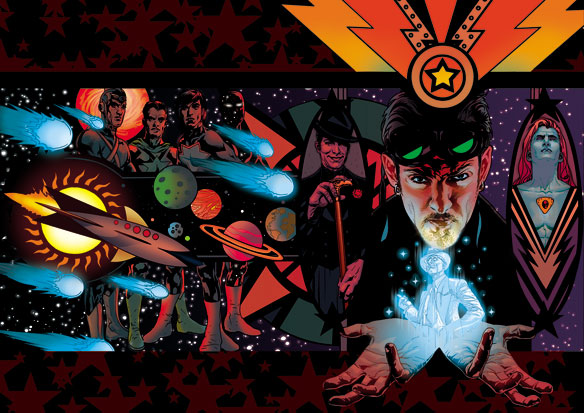
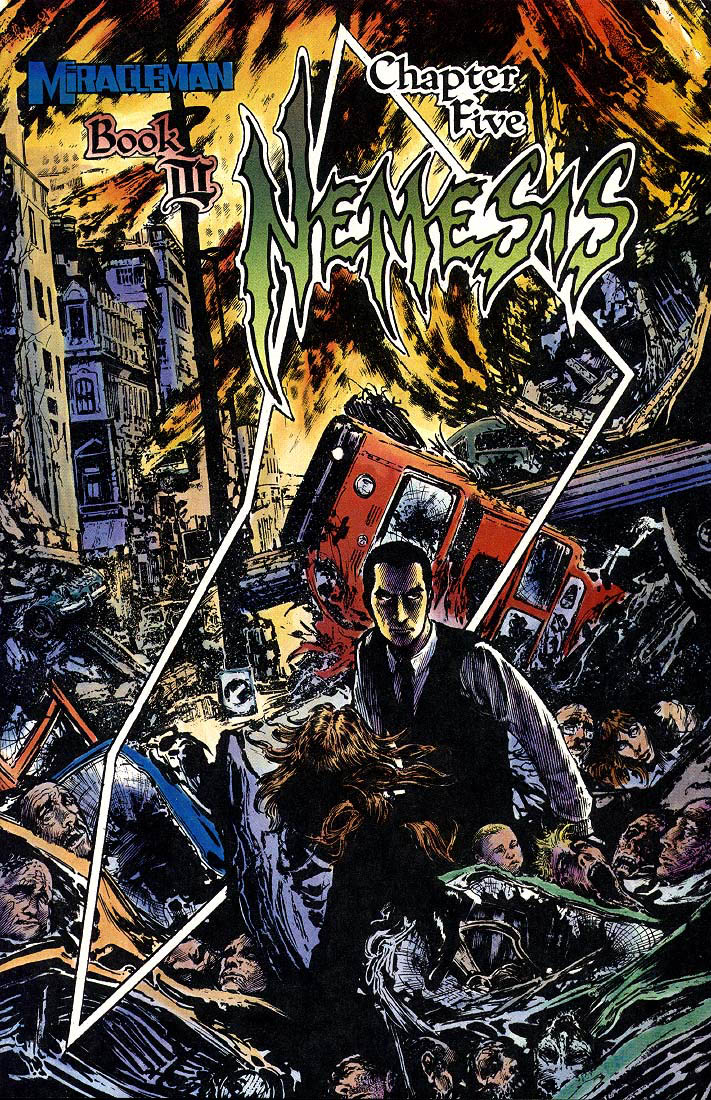
A Kelley Jones Sandman page and a Dave McKean Sandman commission. ‘Season of Mists’ is one of my favorite Sandman arcs, as I have mentioned before, and I already have a Dringenberg page from it that fills my heart with joy every time I look at it. A bulk of the art from the run though was by Kelley Jones, who does not sell most of his originals. Whatever’s available in the market comes from Jones’ inkers, Malcolm Jones III and John Beatty. This page came up for sale on Scott Eder’s gallery at a mind-numbing high price during Wondercon last year. It did not sell. He put it up on eBay a few weeks later, and I emailed to ask if he would accept time payments. Long story short, I bid on it, won it for a little less than my final bid, and much less than the original asking price.
The Dave McKean commission was bought at San Diego, thanks to my friend Joe’s contacts with McKean’s agent Allen Spiegel. McKean himself did not make it to the con, thereby putting my plans of asking for a personalized commission on hold, but he had sent a few pre-done pieces to Allen’s booth, and I got a chance to select and pick one of them up. This conveys just the right amount of grandeur and melancholy associated with the Lord of Dreams. Also, it did not involve me paying $25000, which is the price that one of McKean’s covers usually go for.


Kelley Jones - Sandman 22, page 6 and Dave McKean - Sandman

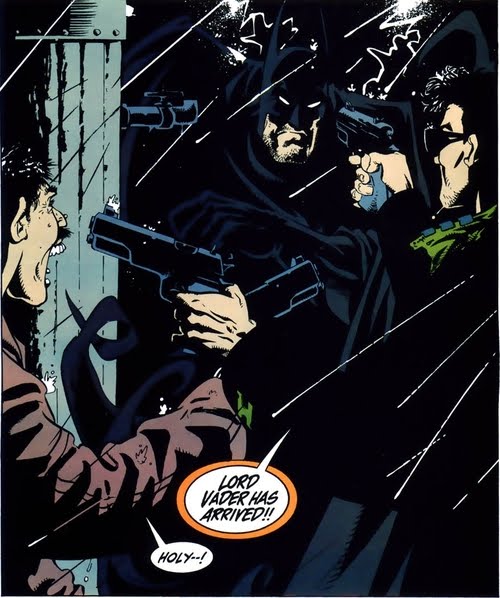
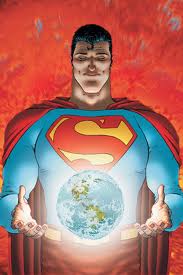
Two Batman pages by Kelley Jones again. One of them was the promotional poster image from a Batman and Dracula crossover, which is one of the most recognizable images of Batman from the nineties, if you were buying comics back then. Jones, in my opinion, is one of the top 5 artists that have worked on Batman, his neo-Gothic, somewhat-surreal style meshing perfectly with the tone of the character. The other one is a cover pencilled and inked by him, and knowing what I just mentioned about him not selling his art, I have no idea how this came into the open market. I saw both of them on a dealer’s page a few days before San Diego Comicon, and jumped on it without hesitation. They were priced well below-market, and also, I fucking love Kelley Jones’ art, man.


Click on each image to enlarge

Three Preacher pages. I owned a Preacher page before which was a self-proclaimed placeholder – quite cheap, but not really something I would put on the wall. It got traded away this year. One of these came from eBay, from the collection of Albert Moy, dealer extraordinaire. It encapsulates the story of Preacher so far in a single-panel spread that caught my eye. The one with the bar scene from a collector who was, in his own words, cutting himself to the bone to get money for a Bolland Killing Joke page. And the third from a close friend. The three of them represents three different art styles through the series, as Dillon drastically stripped down his line-work as the issues chugged by, sort of evolving as an artist and also increasing his output to meet his deadlines.

The third also has an interesting history – it came up on eBay one fine day a few years ago at a ridiculously low Buy-It-Now price, so ridiculous that most of the usual Preacher-maniacs were wary of pulling the trigger. That ensured that my friend saw it and bid on it, and was deluged with higher offers over the years from the ones that missed it. I had asked him to let me know if he was selling it any time, and he made up his mind recently. Needless to say, I pounced on it.

  Click to Enlarge 

Three Preacher Pages (Click to Enlarge)

And finally, something that came in a few days ago. An Adam Hughes painting of Jean Grey as the Black Queen from the Hellfire Club. Now I could give you a manic foaming-at-the-mouth rave about how Adam Hughes’ work combines early 20th century pinup-girl aesthetics with a distinctive art-deco-influenced style and how it is so gosh-darned beautiful and so on and so forth. But I’ll just let you go take a look at his site to decide for yourself. If you collect comic art, getting an Adam Hughes page is a trial in itself. But getting your hands on a good Adam Hughes pinup without breaking the bank? Forget it. He used to do special sketches for fans at conventions – with rates at 200-400$, the pinups would fetch 10 times the amount on eBay when collectors went around to selling them. Due to some “fans” selling their pages a day after a convention was over, Hughes stopped those sketches, causing prices to jump even more.

So I do not exaggerate when I say that this piece fills a very important hole in my collection, and does so in style. It’s 26 inches by 19 inches, and drawn using a combination of crayons, colored dyes and markers. Adam did it as a commission for a collector, and made it extra-large because he made the guy a long time. The collector went on to sell it to someone I know because he was getting married and he needed to raise money quickly, and I bought it from the latter recently. Not cheap, but not that expensive either. And it makes me really, really happy.

Click to Enlarge

Adam Hughes - Black Queen

So yes, happy happy.

One of the genuinely distressing news of 2011 was the failure of the pilot episode of Locke and Key to be picked up for regular programming. This is bad for three reasons – because Locke and Key is one of the finest comic-books being published right now, and the success of the TV show would have no doubt brought in more readers to the series (consider how many people have read Game of Thrones this year, to get an idea of what I mean). Because from what I gather off internet reviews, the pilot episode is really well-made, with superb casting and a great script. But most of all, it sucks because a lot of shitty TV series got green-lighted at the cost of this. Seriously, makes no sense.

But still, the comic stands on its own. It is written by Joe Hill,  a man who, under normal circumstances, be known as Stephen King’s son; but right now, he’s known as the guy behind ground-breaking  genre novels such as Horns and Heart-Shaped Box. It is drawn by Chilean artist Gabriel Rodriguez. Together, the two are magical. This book happens to be one of the most perfect collaborations I’ve seen, where the art enhances the story and vice versa.

Among the things that I love about Locke and Key is that it’s among the most structured comics I’ve read. Not a wasted, throw-away chapter, page or panel on this one. It helps that the story was already planned out into three acts, each act made up of 2 miniseries. This ensures that Hill knows exactly how his story is being framed, giving us just the right amount of information, teasing us with flashbacks and tertiary characters that flicker into the overall plot at the right time. Currently, we are on miniseries #5, entitled Clockworks, where the mythology of the world is being explained by a series of flashbacks. Which brings me to -

The fact that Locke and Key is one of those rare horror comics that gets horror. Which is not surprising, considering Hill’s literary antecedents. But really, do you have any idea how hard it is to do horror in comics without falling back into icky-gore-territory or ho-hum-shock-ending cliches? This book manages to creep into your head in strange ways – through childhood fears, unexpected plot twists, and by a genuinely frightening Big Bad Villain, one that manages to stay one step ahead of the protagonists at nearly every turn.

The first miniseries, Welcome to Lovecraft, introduces us to the principal cast of characters, the Locke family and the three siblings – eldest brother brother Ty, the sister Kinsey and the youngest, six-year old Bode. The death of their father brings them and their mother to their ancestral family home in Lovecraft, Massachusetts, where strange things begin to happen. Bode, for example, finds a strange lady calling for his help from beneath a well. This is also where we start understanding that the tragedy that has befallen the family is not a random incident, but is connected to keys. Keys that do stuff, like turning Bode into a ghost. Or letting people go anywhere they want, or doing distressing things to their psyches.

Finally, Locke and Key is one smart comic that brings unexpected things to the fore on repeated reads. Small example: the second volume is entitled Head Games, and all the covers have a common theme.

In case the image on the right looks a little familiar, here’s why – it’s a riff on an iconic cover from the 1950s that was used by the US Senate to ban horror and crime comics. This particular cover was printed by EC Comics, run by publisher William Gaines, who founded Mad magazine later on. There is this legendary story of Gaines trying to defend this cover as tasteful in court. He did not do a good job of it – in his defense, he was completely doped up on cough medicine when invited to testify.

Oh, and the college the Locke kids go to in San Francisco, before they move to Lovecraft? William Gaines Academy. Ha!

But the smartness lies not just in homages or sly winks at the audience – the smartness lies in the way Hill seems to know exactly when to let certain characters take center-stage, or to subvert a known trope at just the right time, or to let a throwaway part of the scenery become a crucial cog in the battle between good and bad. The two, writer and artist, seem to have fun when telling their story, and that fun is infectious! One of my favorite single issues deals with epic battles and mundane day-to-day affairs, and there are those single-panel settings that hide worlds and untold stories in them, the kind that would make lesser writers milk them through crossovers and back-stories. Hill and Rodriguez do it in single wordless panels, the magnificent bastards!

All said and done, what is the series all about? It helps that every chapter starts with a one-page cheat-sheet, that tells you the bare bones of what’s going on and where we stand.

Locke and Key, ladies and gentlemen. The best fucking comic being published right now, BAR NONE. It helps if you get all the chapters and read them at one go, because every miniseries ends with cliff-hangers. And these are not your everyday, how-do-they-get-out-of-this-level cliffhangers, these are the holy-shit-this-did-not-just-fucking-happen kinds, the ones that make you grab for the next book in the series at 4 AM in the morning, even though your eyes are puffy and you’ve got to be at work at 9.

To recap: I had spent half the day at APE hunting down serendipitously meeting Craig Thompson and had then bought some art off Steve Oliff. Umm, that was it. On to part 2.

So Kate Beaton was due to sign at the Drawn and Quarterly booth. Agenda #1: Find out where the D&Q booth is. Attempting to do that in the hall was a problem because (a) there were no helpful numbers on booths to figure out where you were, at a given moment, and (b) it was hard not to get distracted by the shiny-ness on display. I mean, how can you pass by Stuart Ng books without looking through their collection of artbooks and the out-of-print European comics that they mysteriously manage to keep in stock? How do you control the urge to go spend some time with Richard Starkings and tell him how good the entire Elephantmen run is? (Not to mention the fact that I’ve been reading them on the iPad, and would probably just burst into guilty tears and buy the entire set of 4 hardcovers, which he was selling at the Expo at a sizable discount.) Oh well, I’ve gazed into the abyss, fellas. It’s not pretty. But you just close your eyes, think of beatonna, and scurry to your destination. That’s Kate Beaton’s twitter alias, by the way, and it never fails to make me smirk to myself. I wonder if she selected it for the Japanese reference.

So I find the D&Q table, and sure enough, she’s signing there. Just about three people there clustered around her, so I relax, and ask the guy standing there if he’s in line. “I am”, he says. “And so are they” He gestures behind me. Holy guacamole, there’s an insane line for Kate Beaton! They were cordoning off people three at a time near the table, to keep the crowds moving. The line actually warps around the center of the hall, and there’s an end-of-the-line volunteer waiting to tell people that, yes, that is the end of the line, and no, Kate won’t be signing any sketchbooks – pretty de rigeur for all the artists attending that day. But the line moves ahead merrily, and I take some time to chat with the lady standing behind me, who’s totally getting it on with her dog-eared copy of Bruno Bettelheim’s The Uses of Enchantment (a brilliant analysis of fairytales, a must-read). The guy in front of me is hard-core, carting around – yes, he actually had a cart – a few long-boxes of comics. Of course I get totally judgmental about him – he’s  getting every single Beaton appearance signed, including the APE program guide.

When my turn comes, Kate takes some time to flex her fingers. She asks me what my favorite strip is, and in my head I go “shit, do I mention the Nancy Drew covers? No, that’s too generic. Hmm, I liked the Bronte strips, but hold on, there’s something else I am missing”, while out loud, I say “ba-bah-bu-ba”. And then I take the safe way out and say “All of them”.  Which probably means that I fail her test, and after having slotted me as “clueless generic comic-book fan”, she proceeds to draw Wonder Woman in my book. In the middle of her sketch, I remember that I loved the Javert strips, and tell her so. I don’t think she hears me.

I totally get my program guide signed too, hah!

In the meantime, I meet a few friends, a few art collector buddies. We laugh about the fact that nearly all of us had mailed each other saying we won’t make it to APE this time, and changed plans at the last minute. For a second or two, all of us look funny at each other, each one wondering if the other’s here for some hitherto undisclosed art deal. The moment passes. We do not kill each other.

Craig Thompson is signing again at the CBLDF booth, and I head there, pick up some books from them. I pick up a few others with a 20% discount from a retailer nearby. “Never ignore a discount” is the corollary to my family motto. (Which is “Carpe Omnius”, before you ask, and um, yeah, I am the only practicing member of my family.) This time the line is longer, probably because people are starting to surge in. I think Craig gets a little spooked when he sees me again, but that could just have been my imagination. I tell him about my friend who cried after reading Goodbye Chunky Rice, and we both snicker a bit. Actually no, he sort of understands.

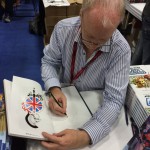
Last signings of the day – Adrian Tomine and Dan Clowes, who are both signing at the Drawn and Quarterly booth at the same time. I do not realize why until I read this, much later. Their line is longer than Beaton’s, obviously. By the time I get to the front, there’s a crowd around Tomine while Clowes is relatively freer. I spend a few minutes getting some books signed and talking to him, after which he takes a restroom break. Completely unrelated, I assure you. He gets back, and I start talking to him again, both of us taking a moment to scoff at mainstream comics together. We totally bonded, man. I introduced myself to Tomine with a request from a friend who, in a fit of high perversion, wanted me to get a drawing of a blonde girl from Tomine. “I will be your bitch forever if you get that for me”, he said, and who am I to refuse an offer like that? Having inked a quick headshot in my copy of Sleepwalk, Tomine does a self-portrait in Scenes From An Impending Marriage, which I totally love.

And with that, I come to an end of my APE adventure. There is some more wandering around the venue, an excellent dinner at a Spanish restaurant afterwards, and a magnificent Thai chilli lemon sorbet after that. 

And this is what I lugged home from the show.

Only 5 of these are mine.


(Originally published in the July 2009 issue of Rolling Stone India)

Summer Blonde

Adrian Tomine (pronounced Toh-mee-nay, not Toe-mine, as many people think) wears a lot of hats. Metaphorically speaking, of course. His current assignments include illustration gigs with the New Yorker and Esquire, designing indie DVD covers, and editing/overseeing arthouse manga for the publishing house Drawn and Quarterly. But Tomine is not known for these interesting career forks as much as he is revered for the series of mini-comics, called Optic Nerve, which he began at the age of 17.

Summer Blonde, the third collection of the creator’s Optic Nerve series, has four stories. ‘Alter Ego’ is about Martin Courtney, a moderately successful writer experiencing writer’s block under the pressure of meeting and surpassing his debut effort. As he puts it, “They say everyone has one great book in them. Maybe I had a mediocre one and that’s it.” Things take a strange turn when he gets a postcard from an old schoolmate he had a crush on, and begins dating her younger sister, who’s still in high school. ‘Summer Blonde,’ the second story has twenty-something Neil, single, obsessed with a girl who sits behind the counter at a greeting card shop who he buys a card from every other day but cannot muster up the courage to ask her out. When she begins dating his neighbor Carlo, a man who knows his way around women, Neil becomes an unwitting stalker of the girl he cares for. Hillary Chan, the protagonist of ‘Hawaiian Getaway’ calls random strangers passing by the phonebooth next to her apartment, desperate to strike up a conversation with anyone at all, after being fired from her job and abandoned by her roommate. ‘Bomb Scare’ is set in a high school, where a boy – a member of the geek clique in the class – strikes up a friendship with popular Cammie, who has just had a traumatic experience at a party.

All these synopses make it sound like the stories go somewhere, but they don’t – think of them more as stray reels of unfinished films. Every story ends, rather, is interrupted, at a point where, in a “normal” plot, there would be a major emotional turning point for the characters involved. Be warned, if you seek happy endings in your stories, or some form of closure for the protagonists, you won’t get that from Tomine’s work. Neil, the protagonist of the second story, meets the girl inadvertently in a crowded subway train, and as they’re pressed against each other, he stumbles to find the right words. “I am sure…you really hate me,” his voice trails off. Pause. “Yeah, but no more than anyone else,” she replies, still looking away from him. End of story.

A striking aspect of Tomine’s comics is the hallucinatory nature of what he writes and draws – the kind that leaves you slightly off-kilter once you’re done imbibing them. It’s the kind of buzz you get from a Michel Gondry film, or a Bjork video, or a Weezer song. All in all, these are more experiences than actual stories. His characters are real, flawed, everyday individuals, riddled with insecurities, bearing the weight of misguided intentions, the kind that one wouldn’t notice in a crowd. They are also fucking creepy, just so you know.

Part of what keeps you engaged throughout are the interesting and varied storytelling techniques. Flashback panels, narrative captions and thought balloons, often avoided by modern comic writers, are employed by Tomine to evoke a unique emotional effect. Observe the way he manipulates silence to optimum effect. Silent panels take the story forward, let us into the mental turmoil of the characters, mark the passing of time, even freeze a few moments into an eternity. This is a comic book auteur who knows the tricks of the trade, and uses them to splendid effect.

In many ways, Tomine’s work is a natural progression of the underground comix movement of the seventies, started by the likes of Robert Crumb, nurtured by stalwarts like Pulitzer winner Art Spiegelman and Charles Burns, and given shape and form in the last part of the century by talents such as Dan Clowes, the Hernandez brothers, and Chris Ware. The creator has openly acknowledged the influence of Clowes and the Hernandez brothers in his work –the clean-lined style of his character drawings, in particular, and the deceptively simple backgrounds owe a lot to Clowes’ Ghost World and David Boring. Also, among the hardest things to do when you’re drawing comics is to create people whose faces, body structure and mannerisms do not meld into one or two oft-used templates with hair color or a costume being the only distinguishable way to identify a character. Tomine’s artwork leaves no doubt in your mind about his complete proficiency in this area – every single character is singularly drawn, each just as ugly or plain or pretty as the story demands.

Among the allegations made by his detractors is his inability to stray from his comfort zone, making all his work suspiciously similar. But there is no taking away the power in Tomine’s work to echo the human condition. The stories are about Americans, yet they resonate with every individual in any society who has ever felt alienated, lonely or loveless. Isn’t that what art is all about?

I nearly did not make it to the Alternative Press Expo in San Francisco this Saturday, thanks to Birdy Nam Nam. The band was due to perform at a French music festival in LA on October 1, and I loved them enough to consider staying back for their show. Unfortunately, they ran into visa problems, and Etienne de Crecy headlined instead. The universe, it seems, really wanted me to be at APE. And since my name isn’t Scott Pilgrim, I do not fight the universe.

The universe also put me in a mild state of euphoria when I got off the BART at the UN Plaza/Civic Center station. I flipped through the last page of The Last Colony, the third book in the Old Man’s War trilogy that I was yapping about a few days ago. Random deus ex machina plot points aside, it was a very very satisfying finish, and it also helped that ‘Saadda Haq’ began playing on my earphones that exact same minute, acting like a closing coda to my week-long read sprint.

My primary agenda of the day was to meet Craig Thompson, he of Blankets and Habibi fame, and get a bunch of books signed by him. Entering the convention center, I tried to mark out the signing spots – the CBLDF booth said that they would have Thompson at 2:30 PM, which meant I could amble around at leisure until then. Which I did, studiously avoiding eye contact with the artists selling their minicomics and prints. No offence to anyone, but I’ve blown quarterly comic/art budgets in the first few hours of a con before, and the most I can do now is to learn from my previous mistakes. No contact = no caving in to temptation.

Until I got to the Lee’s Comics booth. Lee’s happens to be one of the most well-known comic-shops in the Bay Area. I had visited their Mountain View store in 2007, and my I-am-from-India spiel had earned me a hefty discount back then. I wasn’t too confident about pulling that off right now, but as I was gazing through their well-selected con collection, I happened to look more closely the guy Lee was talking to. And realized, with what a pulp fiction writer would call ‘a lurch’ – that Craig Thompson was in the house, yo. Craig caught my eye, called me over and said he recognized me from SDCC – I think it’s more likely he saw the fandom-lust on my face. He was talking to the creator of Zahra’s Paradise, I do not remember whether it was the artist or the writer. As it turned out, Craig was signing at Lee’s comics first, and I was technically first in line, so yeah, whoopee. I told him, as he signed and sketched in my books, how much I had enjoyed reading Habibi, and how it was ironic that Holy Terror and Habibi came out the same week – both centered around Islam, both after years of anticipation and with completely divergent world-views. (A separate post on Habibi and its joys will follow soon, I think)

Just for the record, he was totally nice about my getting multiple books signed. I also bought another book from Lee’s Comics, just to not be a dick and support those guys for getting Craig over. Even went back to the end of the line to not make others in the line wait too much.

Once that was done, I began walking through the other end of the hall. And then the second serendipitous/happy moment of the day – I came across Steve Oliff’s booth.

Who’s Steve Oliff? One of the most well-known colorists of the 80s, Oliff brought computer coloring to comics by working on what would arguably be the most renowned manga of the time, Katsuhiro Otomo’s Akira. How did he do that? By creating color guides using airbrush, watercolor and acrylic, which were sent to the computer coloring team in his studio for reference. This was before Photoshop made pixel-pushing lens-flare junkies out of everyone in the industry, and the results were quite unlike anything being published in the market at that time. Otomo himself approved of the project, and Epic comics milked the hell out of it, making Akira one of the best-selling manga runs, ever. (Read this for more information)

I had met Steve in Super-con 2007, where I bought one of his color guides from him, and he introduced me to the work of Tony Salmons in course of our conversation. He had been a hard man to get hold of, since then. A good friend, on seeing my color guide, wanted to buy a few of his own, and none of Oliff’s online contact information worked. He wasn’t at San Diego this year (he was there as a guest this year, he said, and did not have a booth set up. Ugh!) and we weren’t even sure if he did cons any more. So yeah, meeting him, and seeing the pile of Akira pages in front of him, I chuckled to myself, thinking of my friend’s reaction when I told him that I met Steve at APE. I spent a pleasant hour there, looking through the Akira pages, marvelling at the lovely techniques, chatting with Steve about Otomo art, his experiences and comics in general. I got three pages from him, one of them for my friend, and Steve mentioned that he enjoyed working on that particular page a lot because it had a ‘mist’ effect on it.

It was 2 PM. And Kate Beaton was due to sign at the Drawn and Quarterly booth.

(continued)